

Project Background
HMRC are looking to improve the ways Fraud Investigation Officers can work more effectively and with greater confidence by improving communication, collaboration and sharing domain knowledge. Junior investigators' fear of making crucial mistakes or even being sued drives insecurity and high staff turnover, putting excessive burden on senior investigators to help with "trivial" matters.
My Role
As a Lead Service Designer, I led a team of UX/UI designers, a researcher and visual designer, working closely with an internal team of Business Architects and front-end developers.
Challenge
How might we improve collaboration and confidence by reducing the risk involved in case management activities, through a clear and intelligent case and document management process?
Research Findings — Systems and Information
- —Current infrastructure described as archaic and overwhelming
- —Multiple systems used for information gathering
- —Processes misaligned with user workflows
- —Legal terminology causes confusion and inefficiency
Timeline Dependencies
- —Case teams pressured to meet trial success quotas
- —Manual scanning/uploading is labour-intensive
- —Restricted material access requires time-consuming form completion
Plan
After explaining the benefits of a Co-design workshop over a requirements gathering workshop — which the client's team was used to — I initiated a two-day co-design workshop with Case Workers, Investigators and internal stakeholders. Initially the business identified user types according to job roles. However, by running an Empathy Mapping activity, we identified the main persona groups as Junior Investigator and Senior Investigator, as role seniority was a key factor in the process.

Participants created Experience Maps for work collaboration, mapping the main pain-points and gaps.
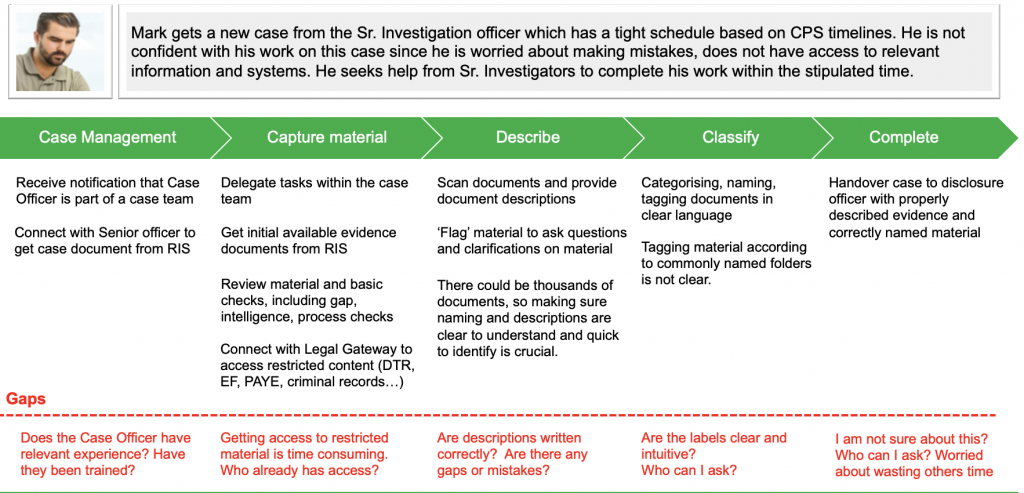
We proceeded with co-design mapping where participants created their own Case Management interfaces for a given scenario and discussed their ideas.
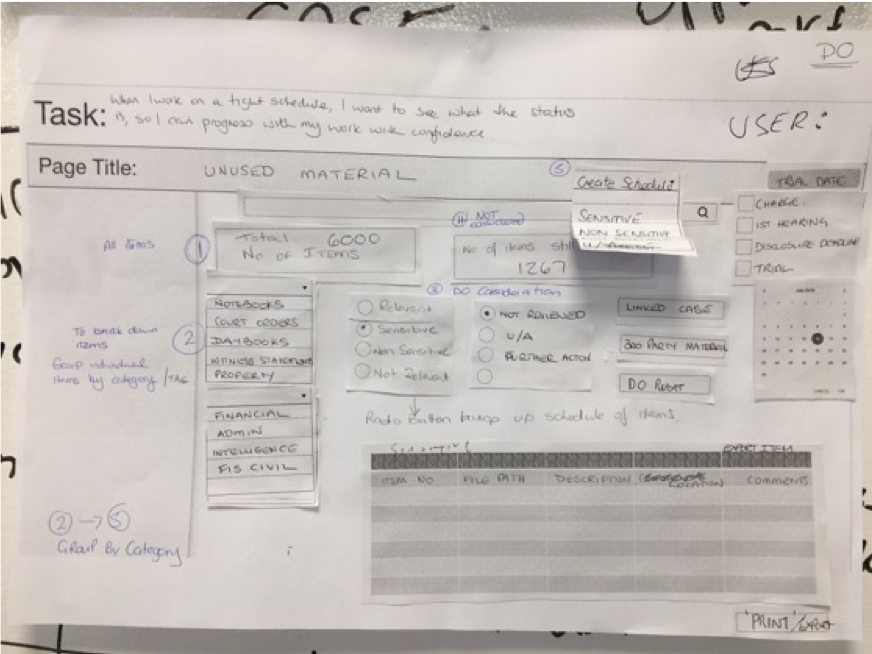
Following the workshop, I led a brainstorming session with our team and identified six key design themes for the interface design.
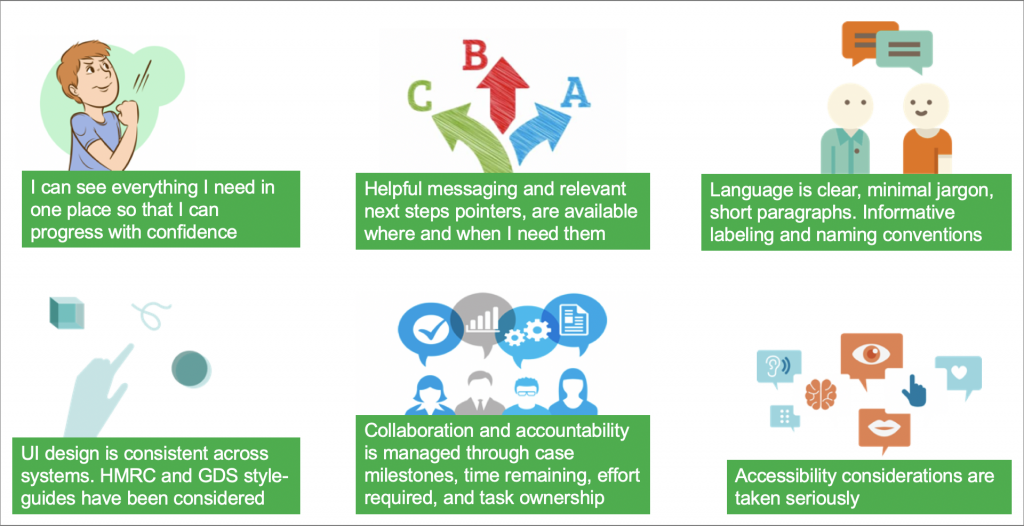
Design concept mapping produced initial wireframes and a clickable prototype tested through remote usability sessions.
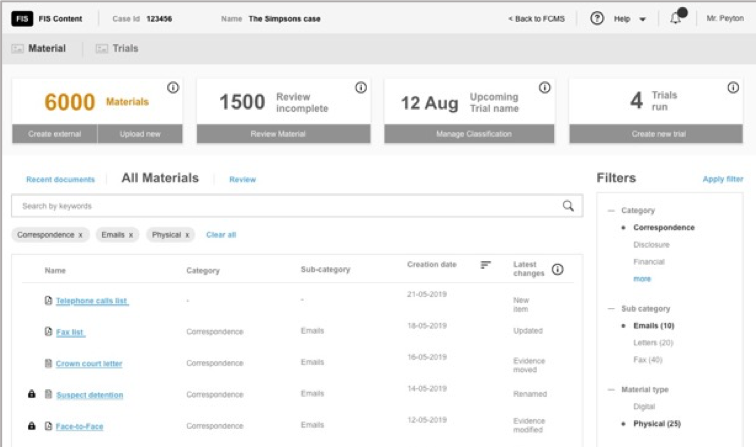
Outcome
The Beta version was presented to the HMRC board and received well. Development and integration of the new system is currently taking place across several HMRC offices. During the board presentation, the confidence issues we identified for junior investigators became clearer, and discussions began around the need for an updated training manual and more support for junior investigators — showing that with user-centred design, a product requirement can become an opportunity for organisational change.