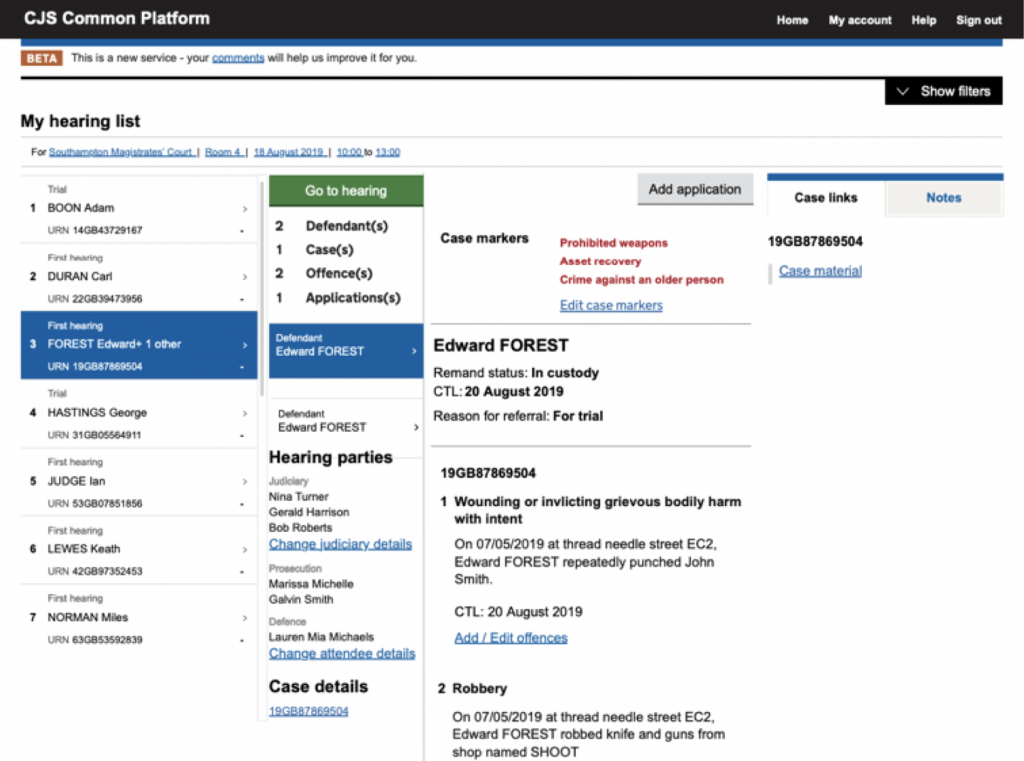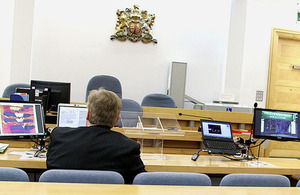
Project Background
The main objectives of the programme: to make efficiencies in the management of criminal cases through digitisation, streamline the business by reducing paper-based form filling and manual file handling, reducing errors and saving expensive lawyers and court time.
My Role
As a UX Practice Lead in this strategic leadership and management role, my aim was to improve the UX team's ways of working. Having previously worked on the Common Platform as a Senior UX Designer, I was called back to enable and mobilise the UX team.
Challenge 1: Defining a User-Focused Process
The programme was set on tight delivery deadlines. Business Architects held focus groups and created requirement documents without involving the UX team, leaving no time for early user research.
Involve researchers in preliminary workshops and user interviews to identify user behaviours, needs and pain-points earlier in the process.
Build relations with Business Architecture team and senior stakeholders to show the value of user research with early insights, so that requirement documents are more focused and based on research rather than assumptions.
Following workshops with the business to explain the design process, decisions were made to add researchers to the Bus. Arc. team in initial Discovery stages, and to run ideation and co-design workshops with real product users.

Challenge 2: Improving the End-to-End Experience
A delivery roadmap was followed without clear indication of how projects link to each other from a user perspective. Some user tasks were cumbersome or impossible to complete as the end-to-end journey was never considered.
Use Service Design tools and co-design workshops to understand how different users perform their tasks and identify disconnected journeys.
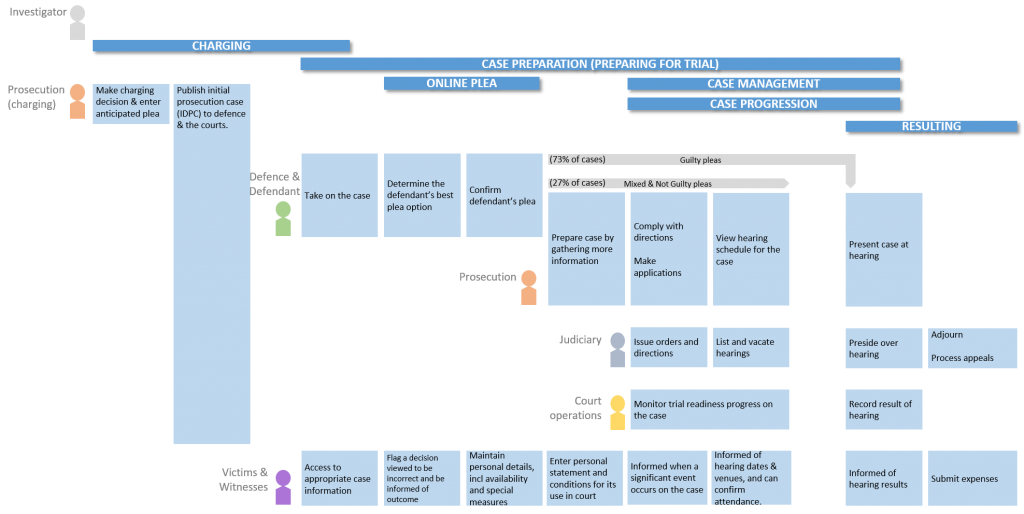
The team built a high-level map of the legal system from a defendant perspective — starting at the point of arrest or fines, progressing through prosecution, defence solicitors, court systems, all the way to trial and sentencing.
Co-design workshops created defendant-led user journeys. A Service Map of the legal system was placed on the wall to facilitate conversations around user needs. Videos of usability testing displayed users' pain-points.
Challenge 3: Increasing the Team Size
The UX team was focused on wireframe deliverables to business requirement documents and didn't feel like they had the full picture. Team members were called in at different stages without background information.
Involve researchers and designers at early stages and kick-off meetings, and increase team size to support projects.
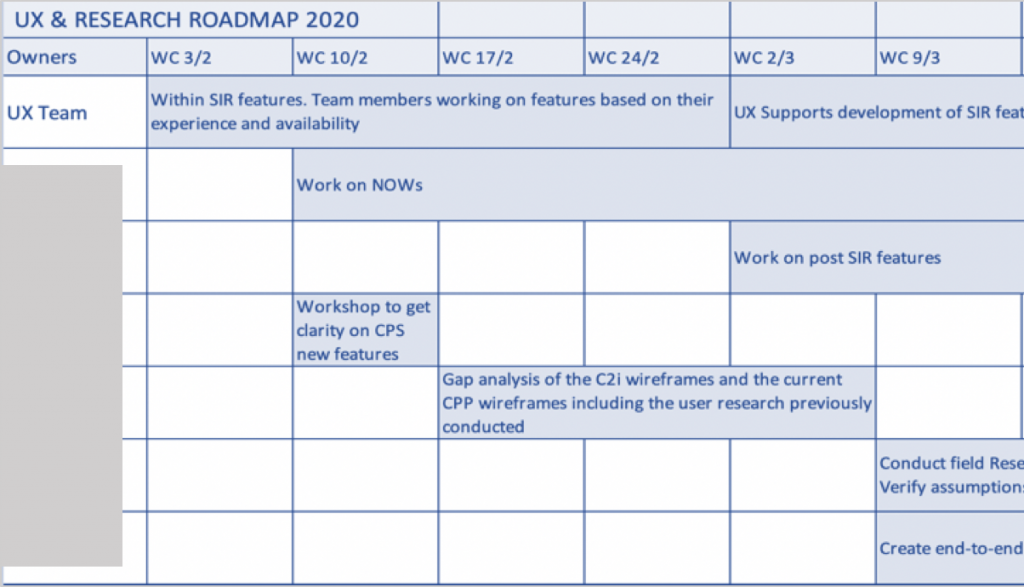
Mapped what projects looked like for the design team from first awareness through to go-live. Set up an online research schedule so everyone could see where and when research sessions take place.
The shift to early research allowed me to make the case with senior managers to hire three additional people to the design team, adding skills in UX, Research, Content Design and Service Design.
Challenge 4: Creating a Style Guide That's Fit for Purpose
Government style-guide — designed for public-facing services — was used for internal systems, sometimes over-simplifying interfaces and limiting functionality for complex courtroom scenarios.
Identify a new set of design components that can surface important information such as alerts, new messages and live changes, not supported by the standard GDS design system.
Taking accessibility considerations into account, a new set of design components formed the base for a new style-guide specifically suited for the Common Platform.
In workshops with Judges and other system users, the UX team identified and designed new components, then coded and tested them with the dev team — covering the gap in GDS Design System components not designed to be time-sensitive.